

The Grand Mufti of Jerusalem and the Sicherheitsdienst
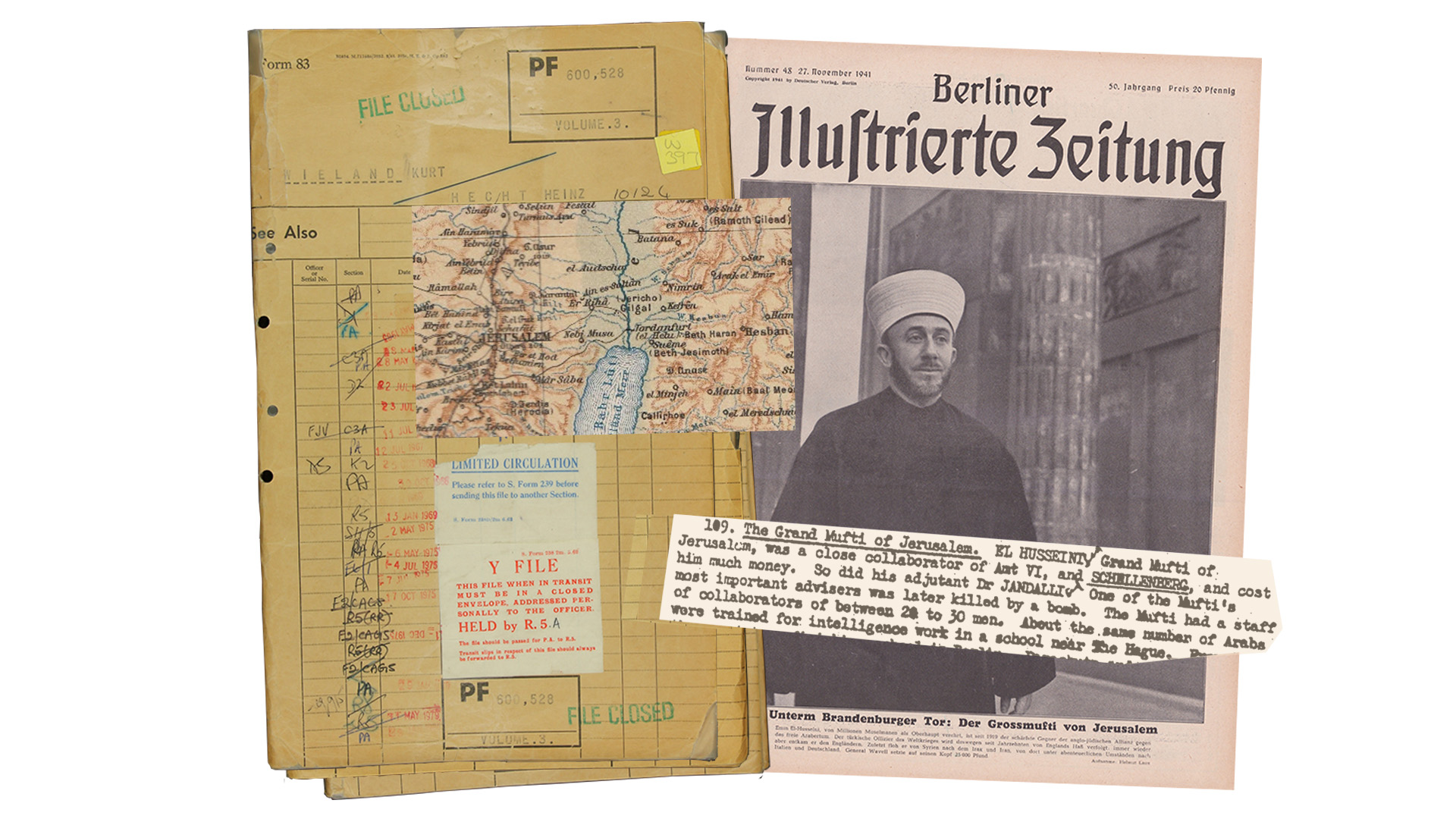
Between May 1943 and September 1944, a secret school of the German political intelligence service, the Sicherheitsdienst, was located in and adjacent to Zorgvliet Park in The Hague. This training program in espionage, sabotage, and radiotelegraphy brought together an international group of students from the Netherlands, Belgium, France, Italy, Germany, and countries in Eastern Europe, North Africa, and the Middle East. A few Swiss nationals, an Irishman, and even an American were also trained at the school. Most of the instruction was provided by Dutch instructors who had served in the Waffen-SS. Wounded on the Eastern Front in Russia and declared unfit for further front-line service, they were reassigned to train students in radiotelegraphy, combat techniques, and explosives handling. Several groups of men from North Africa and the Middle East were trained as part of a collaboration between the German Foreign Intelligence Service and Amin al-Husseini, the Grand Mufti of Jerusalem, who had fled to Nazi Germany.
Goal of the Grand Mufti of Jerusalem
The Islamic leader sought to create a single, unified Arab state encompassing Palestine, Lebanon, Syria, and Iraq. His goal was to make Palestine entirely Arab, leaving no place for the Jewish population. Since 1917, the British government had been working toward establishing a ‘National Home for the Jewish people’, which was formally set up in Palestine, then under British administration, after the First World War. The Grand Mufti of Jerusalem was a staunch opponent of mass Jewish emigration to Palestine. In the 1920s and 1930s, he became the leading instigator of violent resistance against both Jews and British authorities in the region.
In 1937, he fled Palestine. After a circuitous journey, he eventually reached Fascist Italy several years later. In November 1941, the Islamic leader was officially received by Hitler in Berlin. While residing partly in Italy and partly in Germany, he continued his anti-British and anti-Jewish activities. He developed close ties with Reichsführer-SS Himmler and the Waffen-SS. From the summer of 1943 onward, he settled in Germany, and close cooperation developed between him and Walter Schellenberg, head of the foreign intelligence service of the Sicherheitsdienst.
Consumed by hatred, the Grand Mufti saw himself as the orchestrator of Arab retaliation against the Jewish population in Palestine. His aim was to force Jews worldwide to abandon their growing influence over Palestine. Believing that the British authorities in Palestine would not be peacefully persuaded to change their policies or protect the Arab people from Jewish immigration, he turned to violent means. With the support of Nazi Germany, the Grand Mufti created a movement that supplied aid and weapons to organize armed resistance, not only against Jews in Palestine but also against British domination throughout the Arab world.
In 1937, he fled Palestine. After a circuitous journey, he eventually reached Fascist Italy several years later. In November 1941, the Islamic leader was officially received by Hitler in Berlin. While residing partly in Italy and partly in Germany, he continued his anti-British and anti-Jewish activities. He developed close ties with Reichsführer-SS Himmler and the Waffen-SS. From the summer of 1943 onward, he settled in Germany, and close cooperation developed between him and Walter Schellenberg, head of the foreign intelligence service of the Sicherheitsdienst.
Consumed by hatred, the Grand Mufti saw himself as the orchestrator of Arab retaliation against the Jewish population in Palestine. His aim was to force Jews worldwide to abandon their growing influence over Palestine. Believing that the British authorities in Palestine would not be peacefully persuaded to change their policies or protect the Arab people from Jewish immigration, he turned to violent means. With the support of Nazi Germany, the Grand Mufti created a movement that supplied aid and weapons to organize armed resistance, not only against Jews in Palestine but also against British domination throughout the Arab world.
Training at Agentenschule West
In July 1943, the first group of fifteen ‘Arab students’ arrived at the Spy and Sabotage School in The Hague. After two weeks, this group was replaced by a second cohort. Their curriculum included shooting, horseback riding, cycling, motorcycle riding, and various sports activities. Some members also received training in radiotelegraphy. At that time, the school was not yet fully equipped, so little instruction in the use of explosives was provided due to a shortage of qualified instructors. At the end of August, the Grand Mufti inspected the school. In September 1943, another group of about fifteen men arrived, and the program was expanded to include instruction in booby-trapping and street-fighting exercises. Combat training primarily involved the use of British explosives and submachine guns. In November 1943, another Arab group joined the program. Some students who had previously been trained in radiotelegraphy returned in 1944 for follow-up courses, with a focus on radio technology and long-distance transmission, including practice in establishing radio links with Berlin and Egypt. Until the summer of 1944, groups of men, particularly from Egypt and Iraq, continued to receive in sabotage training.
Number of Trained Students
It is estimated that in 1943, more than sixty men from the Middle East and North Africa received training at A-Schule West. In 1944, until the closure of the school, a comparable number of men from these regions were also trained in sabotage and radio telegraphy.
After the war, a staff member stated that the intention had been to train approximately 150 ‘Arabs at the school.’ During interrogations in 1945, the arrested head of Amt VI, as the German foreign intelligence service was also known, stated that it concerned twenty to thirty men who were secretly trained at the school in The Hague and were intended for an operation in Palestine. He was not referring here to the groups that were to be sent to other countries in the Middle East.
The former commander of the school also elaborated after the war on the secret training conducted by Amt VI in The Hague: ‘in 1944, through the intervention of the Grand Mufti, sixty Arabs were placed at the school to be trained as commandos.’ Most students received only sabotage training, while a smaller number were instructed in radio telegraphy. An instructor estimated during post-war interrogations that more than thirty Arab men had been trained in radio telegraphy. Some of them returned for an advanced course.
The total number of trainees of Islamic background ranged between 100 and 150. Not all of them had ties to the Grand Mufti or his combat units. A large group was designated for deployment in missions set up by Amt VI in France.
After the war, a staff member stated that the intention had been to train approximately 150 ‘Arabs at the school.’ During interrogations in 1945, the arrested head of Amt VI, as the German foreign intelligence service was also known, stated that it concerned twenty to thirty men who were secretly trained at the school in The Hague and were intended for an operation in Palestine. He was not referring here to the groups that were to be sent to other countries in the Middle East.
The former commander of the school also elaborated after the war on the secret training conducted by Amt VI in The Hague: ‘in 1944, through the intervention of the Grand Mufti, sixty Arabs were placed at the school to be trained as commandos.’ Most students received only sabotage training, while a smaller number were instructed in radio telegraphy. An instructor estimated during post-war interrogations that more than thirty Arab men had been trained in radio telegraphy. Some of them returned for an advanced course.
The total number of trainees of Islamic background ranged between 100 and 150. Not all of them had ties to the Grand Mufti or his combat units. A large group was designated for deployment in missions set up by Amt VI in France.
Number of students deployed
It can be definitively proven that four men trained at Agentenschule West were deployed on missions in the Middle East. One trained radio operator was arrested in Turkey in September 1944 while en route to Damascus, where he was to join an intelligence network working for the German secret service and the Grand Mufti. Another student from the school was dropped near Jericho as a member of the ‘Atlas Mission’. At least two of the four members of the ‘Tal Afar Mission’, parachuted into northern Iraq in November 1944, had also been trained in The Hague. All three missions failed, as nearly all participants were quickly arrested. Additional men trained in The Hague were to be deployed on follow-up missions to Iraq, Palestine, Egypt, and northwest Africa, but as far as is known, these missions were never carried out.
Mission Objectives in Palestine
From Palestine, the Atlas Group was tasked with maintaining radio contact with headquarters in Germany and reporting on the political and military situation in the region. Their orders included forming and arming combat groups among the Palestinian population, preparing and leading them in guerrilla warfare and sabotage operations. Furthermore, passive resistance among the population was to be encouraged. When selecting military targets, the objective was to inflict maximum damage on all enemies: Jews, the British, the French, and the Americans. Politically, the goal was to create a large Arab liberation movement under a unified Arab leadership and to disseminate pro-German propaganda among the Arab population.
Mission Progress
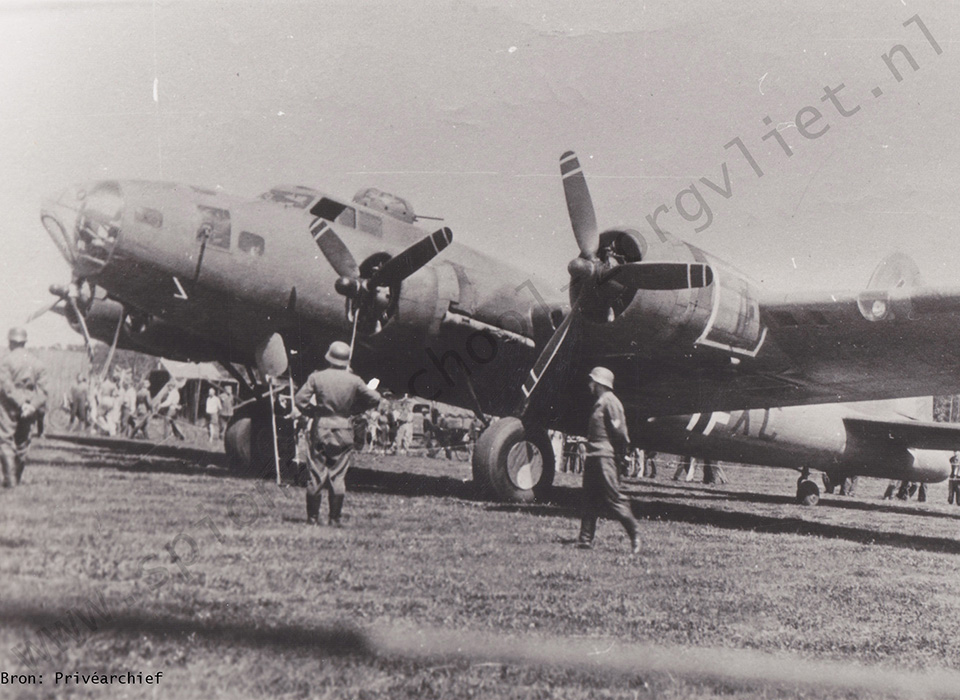
A captured and repaired American B-17 bomber was used to drop the five paratroopers. The aircraft flew in stages from Germany to a Greek island, and from there, during the night of October 5-6, 1944, the German Flying Fortress departed for a pre-selected salt flat in the Jordan Valley, about fifteen kilometers northeast of Jericho. The group was dropped from too high an altitude, and strong winds scattered the men and their luggage across the ground. It took several days for them to reunite. In the meanwhile, British authorities were searching for them, and most of their equipment had ended up in British hands. About a week and a half after the landing, three members of the mission were arrested in Wadi Qelt, west of Jericho. The other two, a German and a Palestinian, remained missing.

Poisoning the Jewish population as a goal?
Some journalists and historians have suggested that one of the aims of the Atlas Mission was to poison the drinking water supplies of Jewish communities. Other historians, however, point out that no reliable source material has yet been found to support this claim. As the Grand Mufti himself once remarked: ‘Newspapers always claimed to know more about a man’s plans than he did himself.’ The most important primary sources on the Atlas Mission are the reports of the interrogations of the arrested mission members, conducted by interrogation experts of the British intelligence service. Most of these reports have been transferred to The National Archives, where they can be studied. Hundreds of declassified documents relating to the Grand Mufti and the Atlas Mission are also available online. These sources reveal, among other things, what was recovered from the mission’s equipment: ‘The luggage included, among other things, sabotage material and a quantity of arsenic oxide for poisoning.’ However, nowhere in the available archival material can any concrete plans for the mass poisoning of the Jewish population be found. Evidence for such a plan remains lacking. What can be concluded with certainty is that the alleged poisoning plot was never carried out.
Rebellion Leader in Palestine
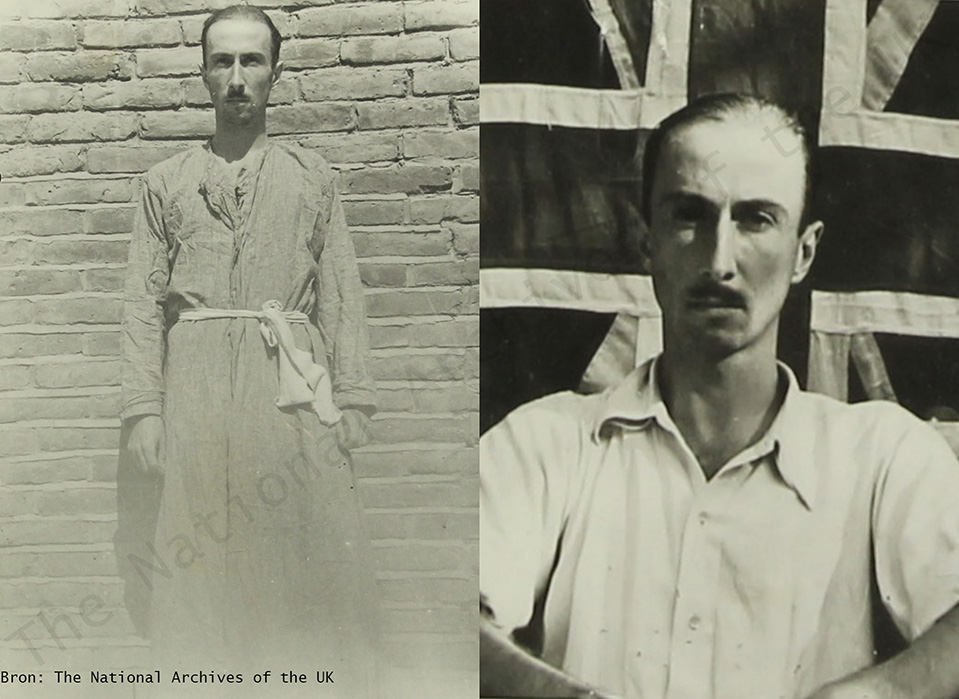
One of the missing members of the mission was the Palestinian Hasan Salama, who had led uprisings in the British Mandate of Palestine in the 1930s. After fleeing the country, he later traveled with the Grand Mufti to Nazi Germany. As a member of the Atlas Mission, he returned to Palestine and remained untraceable to the British authorities. Salama would again play a leading role in violent actions and was eventually killed in combat in 1948. There are assumptions that Salama trained at the Agentenschule West. During the mission, he used the alias ‘Abu Ali’. According to interrogation reports of several Belgian students arrested in 1944, an Abu Ali was indeed present at the school. However, Salama's physical features did not match those of the individual at the school in The Hague who used this name and was apparently supposed to be Salama. Dutch-language interrogation reports from two Dutch instructors at the school, published in 2025 by the National Archives in The Hague, confirm that this Abu Ali could not have been Salama. The Abu Ali at the school was an Iraqi with different physical characteristics, whose real name was Rasoul. He took part in the Tal Afar mission in northern Iraq in November 1944. This does not entirely rule out the possibility that Salama attended the espionage school in The Hague, perhaps under a different alias, but evidence for this is lacking.
Last Group
In May 1945, another group was to depart for the Middle East, which included a student from A-Schule West. This was the group that the Grand Mufti himself planned to join. After Germany’s surrender, the religious leader and his entourage sought to flee to Switzerland, possibly with the intention of continuing to Egypt. The Grand Mufti requested protection from the United States military authorities in occupied southern Germany for himself and fifteen ‘Arab refugees who had been forced to leave their country of origin for political reasons.’ The still existing list of names includes the first and last names of a person that exactly matches the name of a person who had attended the school in The Hague. The Swiss authorities refused entry to the Grand Mufti and his entourage, returning them to the French occupation zone of Germany. Under orders from the French government, the Grand Mufti was placed under house arrest near Paris. A year later, he shaved off his beard and, disguised in a suit, managed to flee to Egypt, where he was granted political asylum. Simon Wiesenthal, the renowned Nazi hunter, wrote in 1947: ‘While his beard grew back, the Grand Mufti also began to resume his old duties.’ According to Wiesenthal, no keen political foresight was needed to predict what the Grand Mufti and his supporters were planning. By that time, most of the Arab men trained at A-Schule West had likely returned by ship across the Mediterranean to their homelands: Algeria, Tunisia, Egypt, Syria, and Palestine. The exact number of returnees and their identities remain unknown.
Possible sixth member of Atlas mission
In late 1944, during the interrogations of the three captured members of the ‘Atlas members’, British intelligence came to suspect that not five, but six men had parachuted into the Jordan Valley. The first and last names of this possible sixth man were obtained, and it was confirmed that he trained at the school in The Hague. How he returned to his country was never clarified, but the same man was back and later trained Palestinians in the use of explosives. This training contributed to several major attacks, including the bombing on Ben Yehuda Street in Jerusalem in February 1948, which killed more than fifty people and injured hundreds.
In early September 1944, Agentenschule West was evacuated to the Heimat, and by 1945, Nazi Germany had ceased to exist. Three years later, attacks were carried out in Jerusalem and, after the establishment of the state of Israel in 1948, within its territory, organized with the help of a man who had been trained at the Sicherheitsdienst’s espionage and sabotage school in The Hague in 1944. Years later, he fled to Syria and died in Damascus in 1988 in an explosion.
In early September 1944, Agentenschule West was evacuated to the Heimat, and by 1945, Nazi Germany had ceased to exist. Three years later, attacks were carried out in Jerusalem and, after the establishment of the state of Israel in 1948, within its territory, organized with the help of a man who had been trained at the Sicherheitsdienst’s espionage and sabotage school in The Hague in 1944. Years later, he fled to Syria and died in Damascus in 1988 in an explosion.

